
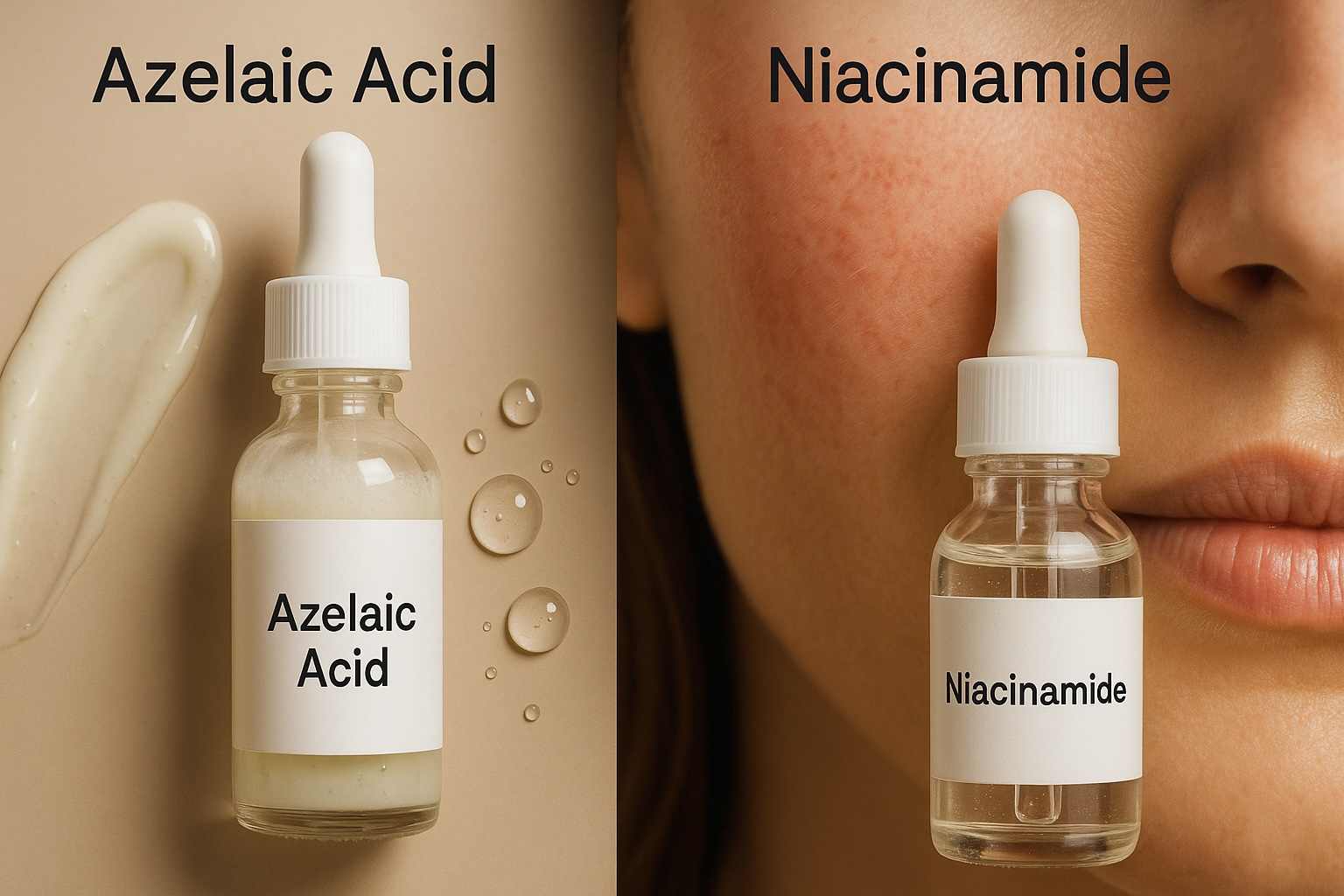
Azelaic Acid vs. Niacinamide for Rosacea
Both reduce redness, but they work differently. Here’s a quick way to choose, and how to layer them if you want the best of both.
Quick Take
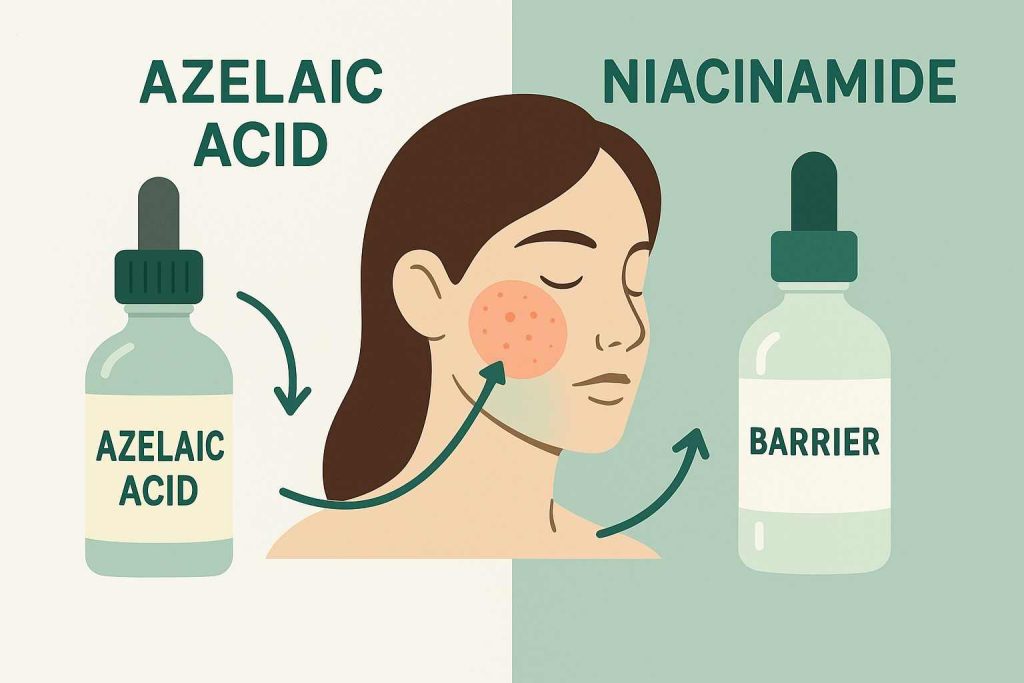
- Choose Azelaic if you have persistent redness, texture/bumps, or post-inflammatory marks.
- Choose Niacinamide if you’re very sensitive and want barrier support with minimal sting.
- Use Both by alternating days or layering (niacinamide → azelaic) if skin tolerates.
Benefits & Mechanisms
Azelaic Acid
- Helps visible redness and papules.
- Refines look of texture and tone irregularities.
- May tingle initially; start slowly.
Niacinamide
- Supports barrier function; reduces water loss.
- Calms look of redness and blotchiness.
- Usually very well tolerated; pairs with most actives.
Tolerability & Side Effects
Azelaic can tingle or sting at first—patch test and ramp up. Niacinamide is typically gentle; rare flushing can occur at very high percentages.
Can You Use Them Together?
Yes. For most, apply niacinamide first (watery serum), let it settle, then apply azelaic (gel/cream). If irritation appears, alternate days.
Sample Routines
Sensitive Beginner
- AM: gentle cleanse → niacinamide → moisturizer → mineral SPF 30+
- PM (3×/week): cleanse → azelaic → moisturizer
Moderate Redness
- AM: cleanse → niacinamide → moisturizer → mineral SPF 30+
- PM (alt. nights): cleanse → azelaic → moisturizer
Round out your routine with a barrier cream and a mineral sunscreen. See: Best Moisturizers for Rosacea and Best Mineral Sunscreens for Rosacea.
Unsure about a product’s ingredients? Paste the INCI into the Ingredient Checker Tool to flag potential triggers.
Want a tailored plan? Chat with SkinGPT Advisor for step-by-step AM/PM guidance.

Leave a Reply
You must be logged in to post a comment.