
Azelaic Acid vs. Metronidazole: Which Works Best for Rosacea?
Two of the most-used topical treatments for papulopustular rosacea are azelaic acid and metronidazole. Both reduce bumps and background redness, but head-to-head trials and recent reviews suggest azelaic acid can offer a modest efficacy edge for many patients—while metronidazole may be slightly easier to tolerate for some.
Before choosing, check our Rosacea Skincare Guide and consider your sensitivity, budget, and routine preferences.
What the Evidence Says
- Randomized trials: 15% azelaic acid gel outperformed 0.75% metronidazole gel for inflammatory lesion reduction and global erythema improvement.
- Earlier data: 20% azelaic acid cream was an effective alternative to 0.75% metronidazole cream, with higher patient satisfaction in one study.
- Recent reviews: Contemporary reviews continue to report greater erythema reduction with azelaic acid vs. metronidazole in overall assessment/IGA, though tolerability profiles differ.
- Network meta-analysis: Among topical options, higher-strength azelaic acid showed strong effectiveness on IGA, with a higher adverse-event profile flagged in some analyses—emphasizing the need to balance efficacy and tolerance.
Efficacy, Redness & Texture, How They Compare
- Bumps/papules: Azelaic acid tends to reduce lesions a bit more quickly in trials.
- Background redness: Both help; some data favor azelaic acid for erythema change on global scales.
- Tolerability: Metronidazole is often described as very gentle; azelaic acid can tingle/sting initially—start low frequency and buffer with moisturizer.
Which One Should You Choose?
- If you want maximum efficacy: Try azelaic acid 15% gel (or 20% cream) once daily, then increase to twice daily as tolerated. :contentReference[oaicite:14]{index=14}
- If you have very sensitive skin: Metronidazole 0.75%–1% is a good first step; you can switch or combine later per clinician advice. :contentReference[oaicite:15]{index=15}
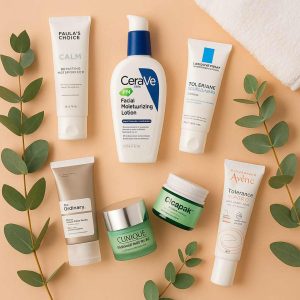
- Combo with gentle skincare: Cleanser + soothing moisturizer + daily mineral SPF 30+ is foundational for both options. :contentReference[oaicite:16]{index=16}
Tip: Introduce actives one at a time and avoid mixing with strong exfoliants early on. If stinging occurs, apply over a thin layer of moisturizer (the “sandwich” method) or reduce to every other night.
Practical Routine (Sample)
AM: Gentle cleanse → Barrier moisturizer → Mineral SPF 30+.
PM (Option A – Azelaic): Cleanse → Azelaic acid → Moisturizer.
PM (Option B – Metronidazole): Cleanse → Metronidazole → Moisturizer.
Check ingredients before you buy: Use our Ingredient Checker Tool to flag fragrance, menthol, or other potential triggers.
Bottom Line
Both medications are effective for papulopustular rosacea. Azelaic acid shows a modest edge in lesion and redness reduction in several trials and reviews, while metronidazole remains a well-tolerated alternative. Choosing the “best” option depends on your sensitivity, routine, and guidance from your clinician.
Further reading: RCT: 15% azelaic acid gel vs 0.75% metronidazole gel (JAMA Derm); Double-blind multicenter trial: azelaic gel superiority on lesions/erythema (PubMed); Systematic review & network meta-analysis: topical options ranking (PMC); Guideline overview: first-line topicals for rosacea (AAFP).
Want a tailored plan? Chat with SkinGPT Advisor to build an AM/PM routine around azelaic acid or metronidazole.
Leave a Reply
You must be logged in to post a comment.